Virgin Active blog
The Best Strength Exercises for Building Muscle
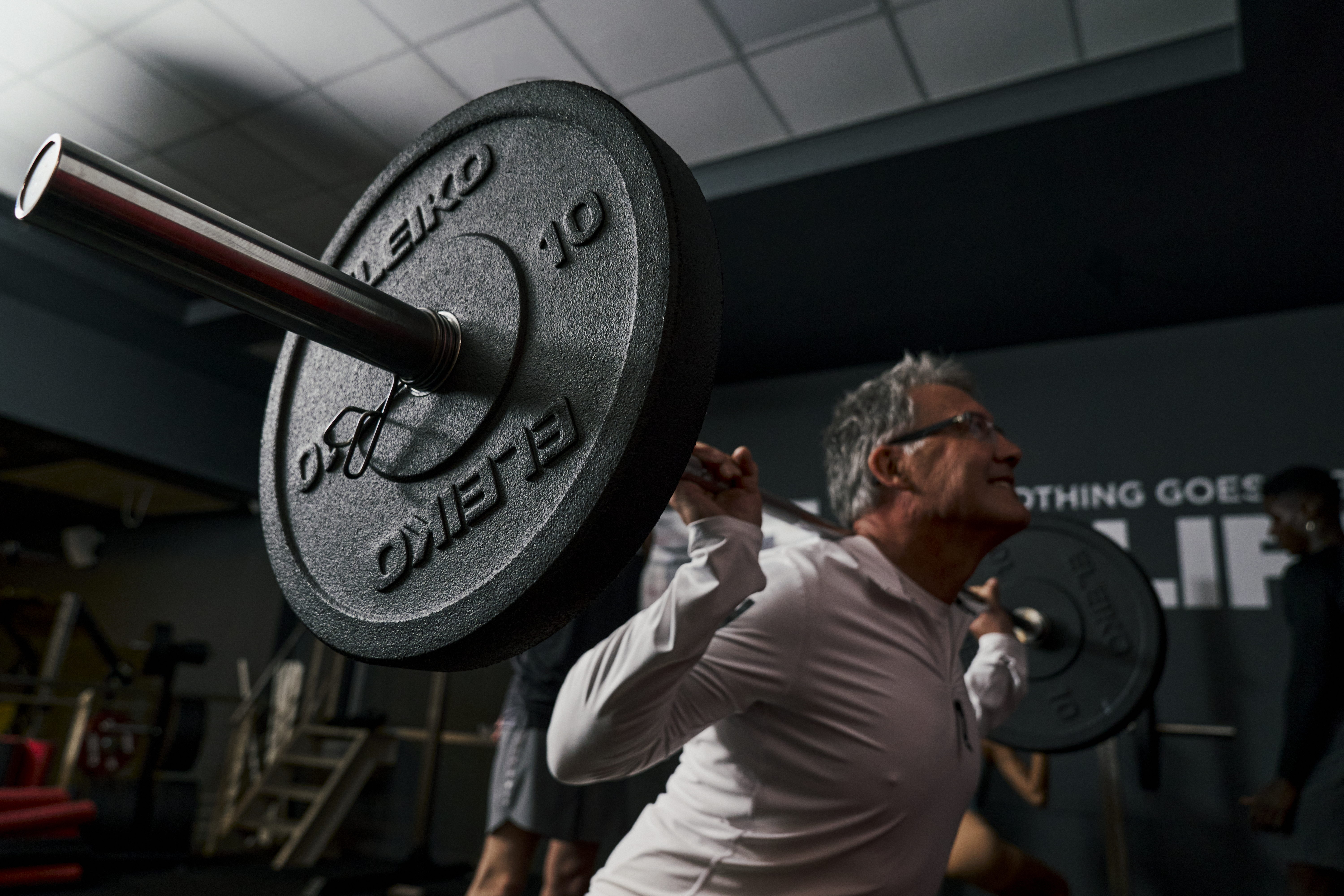
So you’re looking to build muscle? You’re in the right place and strength training is exactly where to start. With so much information out there, it can be overwhelming, so we’ve grouped your weight training into an easy-to-understand guide, giving you exercises to build each of your muscle groups for well-rounded strength.
How resistance training works
Resistance training is when you move your body against a force for the purpose of building strength and muscle. In this blog, we’re talking about resistance training with weights, be that dumbbells, barbells or resistance machines.
Resistance training improves your strength by creating microtears in your muscles which encourage your body to repair and regrow stronger and larger. That’s how your muscles get visibly bigger but also how you’re able to lift heavier loads.
What builds muscle?
The science of muscle building is simple: work against a force to create microtears in your muscles and allow your body to regrow the muscle. However, there are a few things which are extra helpful for achieving strength gains - and some things which aren’t.
To build muscle, you want to be strength training consistently. At the beginning of your journey, aim for at least twice a week and work in a rep range of 8 - 12 for 3 sets. You can adjust this volume to suit your training and how it feels on your body. You want to work your muscles to fatigue, but not so much that you don’t have energy for other exercises in your workout. As you progress, you can lower the reps and choose heavier weights to benefit your body as you adapt to training.
You’ll also want to create a progressive overload. This looks like increasing the weight that you lift every so often or increasing the amount of reps you can do with that weight.
What hinders muscle growth?
As important as it is to work your muscles, resting them properly is key. One of the reasons why people don’t see muscle growth, or see it plateau over time, is because they’re overtraining. When you don’t rest your muscles, you don’t give your body a chance to repair or regrow. And under-rested workouts can lead to injury at worst, or not performing to your optimum range at best.
Another reason people don’t see strength gains in their resistance training is because they don’t increase their weight enough - and we understand. Safety is important in weight training, which is why it’s a good idea to work with a Personal Trainer who can support your strength goals in a healthy way.
What about nutrition?
You’ve probably heard that protein is a non-negotiable for muscle growth. It’s true, but all-round nutrition is also important. When you eat a healthy amount of carbohydrates, you’ll have enough energy for your workouts. When you focus on getting a good amount of healthy fats, you give your body what it needs to make the hormones used to support muscle growth. And when you eat enough protein, you directly fuel those muscle gains. Many of our Personal Trainers are qualified nutrition coaches too, so you can chat to them in club for advice or book in a session or two for more detailed support.
How to build your lower body
Your lower body is any part of your body from your waist down. It includes the following major muscle groups: glutes, quadriceps, hamstrings, calves and adductors (inner thigh).
Maintaining and building muscle in your lower body muscle groups is important because your lower body is primarily responsible for mobility, weight-bearing and balance. Working and growing your lower body muscles can also better support and reduce joint pain in your hips, knees and ankles.
To build strength in your weight training, you can use free weights to train multiple muscle groups at once (known as ‘compound movements’) and resistance machines for isolated muscle targeting. Try:
- Squats, like back squats, front squats, goblet squats and split squats, for your quads and glutes
Deadlifts and Romanian Deadlifts for your glutes and hamstrings
Lunges for your quads and glute muscles
Step ups for your quads, glutes and hamstrings
Hip thrusts for your glutes and hamstrings
Calf raises for your calves
Good resistance machines to build your lower body muscles include: the Leg Press, Hack Squat machine, Leg Extension, Hip Adduction and Abduction machine and the Leg Curl machine.
Alternatively, you could join a Lift Club class and be guided by one of our trainers. We offer Foundations classes which start with the very basics, so if you’re new to weights then this class is for you! You can even check the timetable in advance so you know what the focus will be for each class.
How to build your core
Your core is the mid-section of your body also known as the ‘trunk’. It includes your rectus abdominis muscles - or your six-pack muscles - as well as your pelvic floor muscles at the base of your spine, your obliques, your transverse abdominis which wrap the spine and are found deep within the abdomen and your erector spinae which runs the length of your spine.
Your core muscles are always on, whether you’re training them or not, and the only time they properly relax is when you’re asleep. It’s important to train your core muscles because they act as your stabilisers and, because they support your body, they can prevent problems like back pain.
The good thing about training your core is that you can add workouts into your existing routine without needing a core-focused strength training day. And you can train your core with exercises like:
- Crunches for your rectus abdominis and obliques
Bridges for your transverse abdominis, obliques and erector spinae
Plank and side plank for your transverse abdominis, rectus abdominis, obliques and erector spinae
Mountain Climbers for your rectus abdominis and obliques
Turkish Get-ups for your rectus abdominis, obliques and erector spinae
Hollow Holds for your rectus abdominis, transverse abdominis and obliques
You’ll also find a lot of core-based exercises in our Calisthenics classes, which work on using bodyweight to build strength.
How to build your upper body
Strength in your upper body is mainly important for functional movement, since a lot of the carrying we do - groceries, children, heavy objects - requires upper body strength, in addition to power from our lower body. But it’s also important for our posture, injury prevention and stopping age-related muscle loss.
Your upper body is grouped into the following muscles: chest, back (including lats and your trapezius muscles), shoulders and arms (including your biceps and triceps). Because this section covers a lot of muscles, it’s common for people to create separate training days for their ‘push muscles’ (chest, shoulders and triceps) and ‘pull muscles’ (back and biceps).
To build strength in your upper body, try the following exercises. On ‘push days’, use a mixture of compound and isolated movements to target your chest, shoulders and triceps, such as:
- Bench press
Incline dumbbell press
Dips
Overhead press
Lateral raises
Push ups
Cable flys
On ‘pull days’ try these exercises to target your back and biceps:
- Rows
Pull ups
Curls
Lat pulldowns
FAQs
What are the benefits of strength training for beginners?
It builds muscle to support your body in day-to-day tasks, it improves bone density, prevents injury, gives you better balance, posture and stability as well as boosting your confidence and self-esteem.
How often should you do strength training each week?
You should aim to train strength at least twice per week. The more you train, the sooner you’ll see results and the faster you’ll build muscle - however, speed is less important than staying safe and working with what feels best for your body. If you want to train more than twice per week, be sure to allow 48 hours before working the same muscle group so that your body can recover.
How long does it take to see results from strength training?
Strength training results depend a lot on your goals, how often you’re training, how much you’re overloading your muscles and how well you’re nourishing your body with sleep and food. That said, if you’re prioritising your overall wellbeing, you could see improved strength in 2 - 4 weeks with consistent practice, more energy and noticeable strength gains in 8 weeks and changes in your body composition at around 3 months.
Is strength training better than cardio for overall fitness?
Strength training and cardio are equally important as each other, especially for overall fitness. They’re complementary and while weight training improves muscle strength, cardio boosts your heart health.
