Virgin Active blog
9 Reasons Swimming Is An Important Life Skill For Your Child
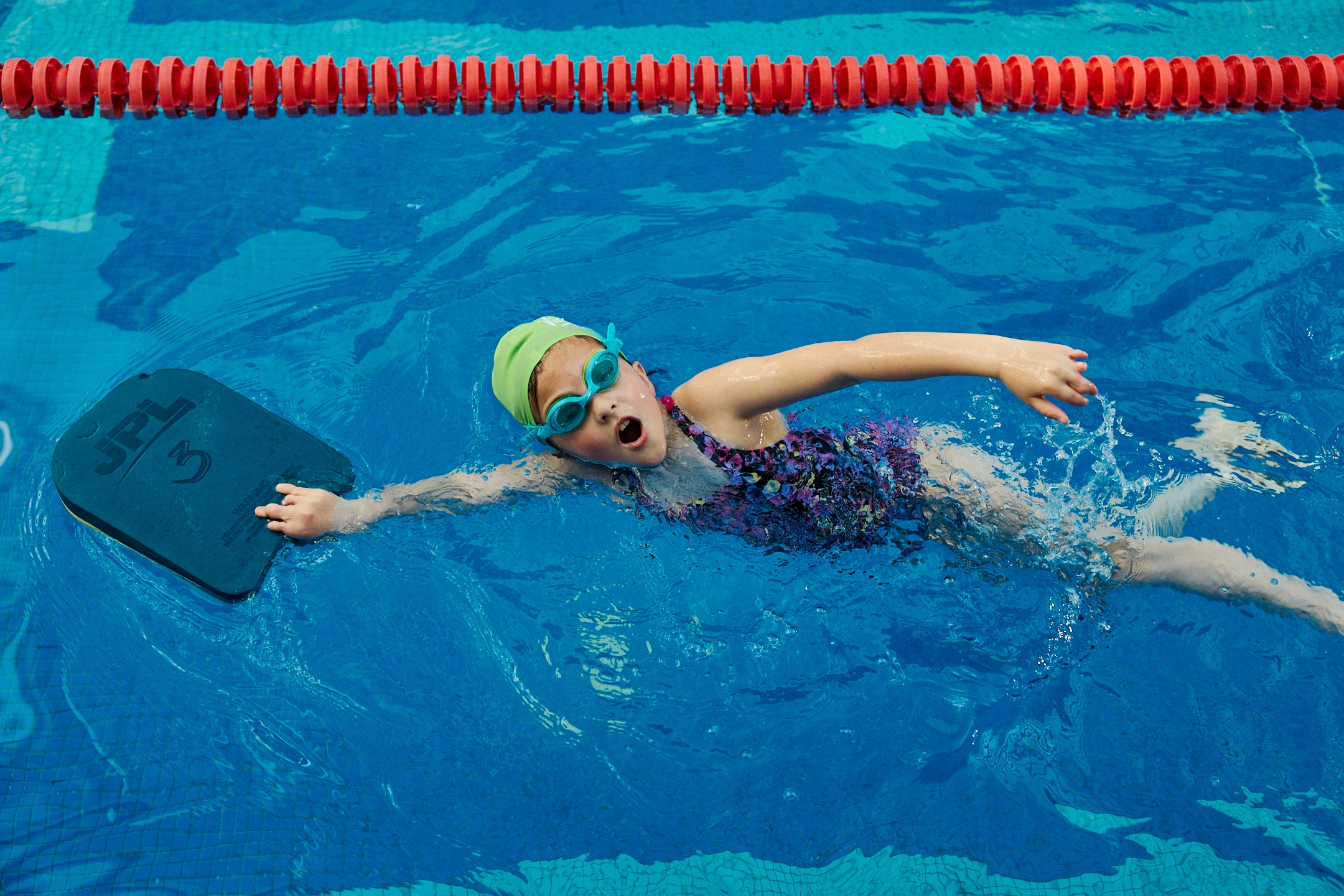
Swimming is not just a holiday must-have, it’s one of the most important life skills that your child can ever learn. And it’s not just because of water safety either. Children’s swimming lessons can help young people develop skills which will help them outside of the pool, like focus, concentration and problem solving.
Key takeaways
There are lots of benefits to children’s swimming lessons, including building resilience, social skills and coordination
Children of any age can start swimming lessons
Feeling confident in the water will help children stay safe
It helps them stay safe in the water
Perhaps the most obvious benefit is that learning how to swim helps children stay safe in the water. They’ll learn how to float, how to swim and develop strength in their muscles, as well as stamina, which can help them in water with currents.
This not only stops them from getting in trouble but it also takes out a lot of the fear around water. When a child feels confident in the water, they are more aware and able to respond.
It helps coordination and body awareness
Speaking of responding, swimming helps children to become aware of their bodies and how they move. This helps them to fine tune their coordination by moving their arms and legs in a rhythm with their breath so they can glide with ease (and sometimes speed) through the water.
It helps concentration and focus
Swimming requires patience. It needs you to focus on your strokes, think about your breathing and maintain good form to be efficient in the water. That’s why, for children as well as adults, swimming can be useful to train focus. Counting your strokes, breathing and adjusting your body to stay afloat means you’re mentally aware. Over time, this can translate into the real world.
It builds resilience
While the human body is very adaptable within water, it’s not our natural habitat. Becoming a strong swimmer requires practice. It asks us to show up, even battle cold water some days, and work on this new skill.
The patience and practice that we put into swimming builds resilience. Children learn that the more they work at something, and take challenges in their stride, the more capable they will become. There’s nothing quite like tackling a hard stroke or doing your first splashless dive.
It builds courage
As adults, we know that it’s important to learn how to swim and that, when we do, the water becomes less scary. But that kind of logic doesn’t work on the kid that’s petrified of the pool.
Whether children are fearful of their first lesson, putting their head in the water or are a confident water baby who’s never gone into the deep end, quite often swimming is about facing our fears. Some are bigger than others. But the feeling of conquering them leaves us feeling accomplished and in a young child can build lots of courage.
It improves their social skills
Even if your child is doing 1-2-1 sessions, swimming builds their social skills. More often than not, your child will be in a class with other children who come from different schools and different backgrounds. It’s a great opportunity for them to connect over a common goal (learning to swim) or go head-to-head in friendly competitions.
Out of the pool, this may leave them feeling more confident to talk to new people in the future.
It helps with problem solving
Swimming is not easy and getting everything to work in coordination while keeping up a good speed and breathing technique takes work. Problem solving is key. How do you move your body in the most efficient way? How do you sink your body to pick up weight from the bottom of the pool? How do you get yourself to float? Cognitive challenges like this help your child to solve real world problems.
It calms the nervous system
Despite how tricky it can be to learn the basics of swimming, once you’ve got the hang of it, it becomes rhythmic. Rather than thinking, your body just does. You repeat the motions. And for many people, including children, this becomes a meditative experience.
It creates new neural pathways
As with any new skill, swimming helps to build new neural pathways, especially in the quick-developing mind of a child. With new neural pathways, you strengthen your brain health and improve your memory and focus.
Not yet a member? Find your nearest club and start your membership today.
FAQs
What age should my child start swimming lessons?
Swimming is great at any age and there’s no minimum age requirement for kids. If you’re ready to take the plunge, you can join a Parent and Baby class at Virgin Active or, if they’re older, they can head straight into our swim programme.
How often should kids have swimming lessons to make progress?
As with anything, the more you do it, the better you become. That said, children can swim once or twice a week and still see their progress improve.
What if my child is afraid of the water?
Gradually build up their exposure by taking them to the pool. Maybe you just look at the pool one time. Another time you may just put your feet in. Start at the shallow end and gradually develop. The water is nothing to be afraid of and your calming presence will eventually help them become confident.
How does swimming help children outside the pool?
It can help a child’s motor skillset, coordination, social skills, relaxation, problem solving, courage and resilience.
Why is swimming considered a life skill, not just a sport?
Swimming is a sport which builds muscles across all of your body but a lot of what you learn can be translated into real world scenarios, including how to solve problems, how to be mentally tough and bounce back from mistakes.
You may also like...
|