
Virgin Active blog
Coordinating exercise with your menstrual cycle
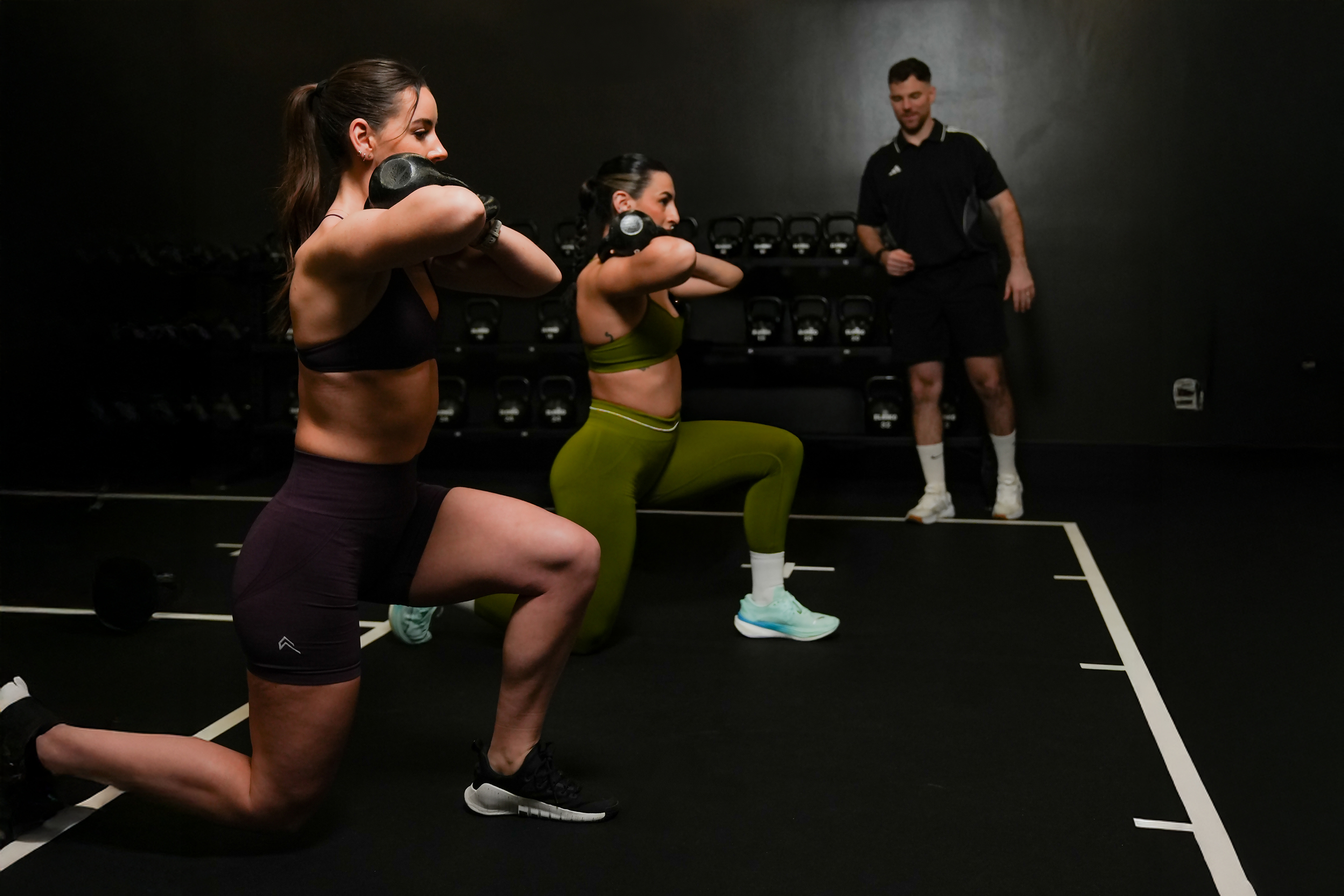
The truth about cycle syncing and exercise - Coordinating exercise with your menstrual cycle
by Alice McGee, MD, MSc [Medically reviewed by Cornelia Hainer, PhD]
Top things to know:
- Regular exercise and strength training can reduce premenstrual symptoms such as pain, breast sensitivity, and anxiety.
- While there is some evidence that hormonal fluctuations during your menstrual cycle can influence exercise and training, cycles vary from person to person and cycle to cycle.
- Paying attention to your body and tracking your energy levels is the best way to figure out an individualised approach to exercise, which clinicians and researchers recommend.
Please note that if you are using hormonal birth control, you may experience different hormonal changes than the ones described in this article.
Cycle syncing is the practice of coordinating your daily activities, like exercise, nutrition, sleep, and work, with the hormonal fluctuations of your menstrual cycle. Doing so is said to have a myriad of benefits like easing menstrual symptoms, boosting energy, mood and fertility, and balancing one's hormones. When it comes to exercise, cycle syncers are commonly advised to limit exercise when hormone levels fall before and during one's period. They are also encouraged to do high-intensity exercises when oestrogen levels are high. Anecdotal evidence suggests that doing so allows you to take advantage of high energy levels.1
And while there is evidence that hormonal fluctuations during your menstrual cycle can positively influence exercise and training, it’s hard to pinpoint your exact hormone levels each day. Plus, cycles are rarely consistent, vary from person to person, and can be affected by environmental circumstances like stress and your lifestyle2, so it is misleading to claim that everyone with a cycle should do strength training on, say, day 14 of their cycle, or during, say, the luteal phase.
Cycle syncing can also be unrealistic for the average person. Many of us find it difficult enough to fit in basic exercise during the week, much less organise exercising around the specific phases of our menstrual cycles. Since regular exercise and strength training are scientifically proven to improve overall health outcomes and reduce premenstrual symptoms such as pain, breast sensitivity, and anxiety3, cycle syncing could even be counterproductive if it leads to less exercise.
More research is needed to better understand how exercise and the menstrual cycle are related. But, for now, women and people with cycles are underrepresented in sport and exercise studies. The majority of this research (as well as most research in general) focuses on male participants.4 Where there is research with female participants, the menstrual cycle is not frequently taken into consideration5, and even when it is, the quality of these studies tends to be low with small sample sizes, methods that are difficult to compare, and conflicting results.6
This means that we unfortunately still don’t know much about how hormonal changes might impact sports performance and therefore, how to best adapt exercise routines to address these changes. Read on for answers to the most commonly asked questions about cycle syncing and the latest research on cycles and fitness.
The basics of cycle health
The menstrual cycle might be considered the fifth vital sign since it can indicate a lot about the state of your body. Your cycle affects sleep, mood, energy, bone health, metabolism, and heart health, among other things. And it can be an indicator of how well your body is functioning.7 Your cycle can likewise be affected by external factors like diet, sleep, other medical conditions, and physical activity.8
A refresher on the basics of the menstrual cycle: There are two main phases of the menstrual cycle, separated by ovulation (when an egg is released from one of the ovaries): the follicular phase and the luteal phase.
The follicular phase
The first part of the cycle, from the first period day until ovulation, lasting approximately two weeks in a typical menstrual cycle (although this may be longer or shorter and varies between people).
The luteal phase
The second part of the cycle and is the time between ovulation and your first period day, lasting approximately two weeks in a typical menstrual cycle.
Progesterone and oestrogen, which are produced primarily by the ovaries, are the two main hormones that regulate your cycle and can also impact many other processes in your body.7
FAQs
Is there an optimal time to do high-intensity workouts during my cycle?
Possibly, when oestrogen levels are elevated. But without daily testing, we are currently unable to identify when those peaks would be or to what extent they would be helpful.
Higher oestrogen levels are associated with increased muscle building, increased energy storage, and lower risk of injury.6,9 So it's possible that you have more energy and that workouts feel easier when your oestrogen levels are elevated during your cycle. In a typical cycle, oestrogen normally peaks twice, initially in the days before ovulation and then during the mid-luteal phase.10
While it’s tempting to try to schedule your high-intensity workouts during these oestrogen peaks, it can be difficult to do so. Cycles are just too variable month-to-month and too dependent on each individual and their environment to optimise in this particular way. Plus, the hormonal effect is likely very subtle, with most people being unable to detect a change in energy or performance at all.6
Tracking your cycle with Clue, on the other hand, may help you understand when your energy levels are high, which can, in turn, help you prepare for when you might want to take on new or more challenging workouts (and possibly take advantage of oestrogen peaks).
Should I limit myself to low-intensity exercise before & during my period?
Not necessarily! When oestrogen and progesterone levels fall in the days before your period, many people experience a decrease in energy along with an increase in premenstrual symptoms such as fluid retention, mood changes, and pain, which can play an important role in how you feel when exercising.11,12 While these symptoms may hinder some people from doing exercise, others might find exercise beneficial for helping to relieve these symptoms.3 If you're not feeling up to your normal cardio or HIIT class, a more gentle form of exercise like yoga or a walk may be a more suitable choice for you during this time. However, not everyone experiences cycle-related symptoms, and there's no reason to modify your exercise routines unless you do.
Some evidence suggests that exercise performance may be reduced at the start of the period, compared to other phases of the menstrual cycle.6 You may notice you have less energy and find your workout more difficult than you usually would. However, fluctuations in exercise performance across the cycle are likely minimal for most people, and many may not notice a difference at all.6
Rest is an important part of any fitness routine or training program. If you feel tired while exercising, it may be helpful to incorporate longer recovery times, try lighter exercises, or even take a rest day, regardless of where you are in your cycle.
On days when you have low energy, a low-impact workout, yoga flow, or Pilates class can help you get moving without an all-out intensity.
Track your cycle with Clue, to determine what’s best for you. At Virgin Active, you can get 3 months of Clue Plus on us when you hit your weekly reward, or 75% off a 12 month subscription. Both offers available via your Virgin Active app.
Is there an optimal time to do strength training during my cycle?
Maybe, but the studies are limited and more research is needed.
Regular strength training each week is an important part of improving and maintaining health.13 Some early studies indicate that high-intensity strength training sessions during the late follicular phase when oestrogen levels rise and peak, can lead to higher muscle mass gains when compared with strength training done during the late-luteal phase.14,15
Training during the late follicular phase may also have additional benefits: elevated oestrogen levels may also provide some protection against exercise-induced muscle damage and lead to less muscle inflammation post-workout.9 Another study found incorporating strength training into one’s routine during the late-follicular and mid-luteal phase (two times of the cycle characterised by increased oestrogen) could lead some people to find it easier to lift heavier loads and need less recovery time.16 And, oestrogen may increase pain tolerance17, so lifting heavier weights may feel more manageable during these times.
You may also feel less sore during the mid-luteal phase. Increased levels of progesterone and oestrogen may lead to a lower chance of delayed onset muscle soreness (DOMS or the feeling of muscular discomfort 24–48 hours after intense exercise) and strength loss.16 DOMS and strength loss may be more likely to happen during menstruation.16
Still, cycles tend to be variable and everyone's cycle is individual. While these studies offer a great framework to consider when you might challenge yourself to lift more or less, it's more important to modify your workout based on how you're feeling every day.
An individualised approach is best
Your body is not a clock and your cycle is influenced by many things in your life, including your hormones. Even if you have predictable periods, you may still experience some changes from cycle to cycle, including when you ovulate and what symptoms you experience.18 That's why getting to know your body and tracking what works for you is often the best approach to exercise.
Getting 30 minutes of aerobic activity five days a week is proven to maintain your overall health, improve your brain health, and reduce your risk of developing chronic diseases.13
To learn more about your unique cycle and gain insights into how your cycle affects your fitness routine, track your experiences in Clue.
References
New York Times: Cycle Syncing is Trendy. Does It Work? [Internet] 2023. Available from:
https://www.nytimes.com/2023/06/01/well/move/menstrual-cycle-syncing-exercise.html
Bull JR, Rowland SP, Scherwitzl EB, Scherwitzl R, Danielsson KG, Harper J. Real-world menstrual cycle characteristics of more than 600,000 menstrual cycles. NPJ digital medicine. 2019 Aug 27;2(1):83.
Yeslidere Saglam H, Orsal O. Effect of exercise on premenstrual symptoms: A systematic review. Complement Ther Med. 2020;48:102272. doi:10.1016/j.ctim.2019.102272.
Costello JT, Bieuzen F, Bleakley CM. Where are all the female participants in Sports and Exercise Medicine research? Eur J Sport Sci 14: 847–851, 2014.
Elliott-Sale KJ, Minahan CL, de Jonge XAKJ, Ackerman KE, Sipilä S, Constantini NW, Lebrun CM, Hackney AC. Methodological Considerations for Studies in Sport and Exercise Science with Women as Participants: A Working Guide for Standards of Practice for Research on Women. Sports Med. 2021 May;51(5):843-861. doi: 10.1007/s40279-021-01435-8. Epub 2021 Mar 16. PMID: 33725341; PMCID: PMC8053180.
McNulty KL, Elliott-Sale KJ, Dolan E, Swinton PA, Ansdell P, Goodall S, et al. The Effects of Menstrual Cycle Phase on Exercise Performance in Eumenorrheic Women: A Systematic Review and Meta-Analysis. Sports Med. 2020;50(10):1813–27.
Shea AA, Vitzthum VJ. The extent and causes of natural variation in menstrual cycles: Integrating empirically-based models of ovarian cycling into research on women’s health. Drug Discovery Today: Disease Models. 2020;32:41–9.
Campbell LR, Scalise AL, DiBenedictis BT, Mahalingaiah S. Menstrual cycle length and modern living: a review. Current Opinion in Endocrinology, Diabetes and Obesity. 2021 Dec;28(6):566–73.
Isacco L, Boisseau N. Sex hormones and substrate metabolism during endurance exercise. In: Hackney AC, editor. Sex hormones, exercise and women: scientific and clinical aspects. London: Springer; 2017. pp. 35–58.
Reed BG, Carr BR. The Normal Menstrual Cycle and the Control of Ovulation [Internet]. Feingold KR, Anawalt B, Boyce A, Chrousos G, Dungan K, Grossman A, et al., editors. PubMed. South Dartmouth (MA): MDText.com, Inc.; 2000 [cited 2023 Sep 18]. Available from: https://www.ncbi.nlm.nih.gov/books/NBK279054/#
Lebrun CM. Effect of the different phases of the menstrual cycle and oral contraceptives on athletic performance. Sports Med. 1993 Dec;16(6):400–30.
Foster R, Vaisberg M, Bachi ALL, Dos Santos J de MB, de Paula Vieira R, Luna-Junior LA, et al. Premenstrual Syndrome, Inflammatory Status, and Mood States in Soccer Players. Neuroimmunomodulation. 2019;26(1):1–6.
Centers for Disease Control and Prevention (CDC). CDC - Benefits of Physical Activity. [Internet] 2023. Available from: https://www.cdc.gov/physicalactivity/basics/pa-health/
Sung E, Han A, Hinrichs T, Vorgerd M, Manchado C, Platen P. Effects of follicular versus luteal phase-based strength training in young women. Springerplus. 2014 Dec 1;3(1):668.
Wikström-Frisén L, Boraxbekk CJ, Henriksson-Larsén K. Effects on power, strength and lean body mass of menstrual/oral contraceptive cycle based resistance training. Journal of Sports Medicine and Physical Fitness. 2017.
Romero-Parra, Nuria; Cupeiro, Rocío; Alfaro-Magallanes, Victor M.; Rael, Beatriz; Rubio-Arias, Jacobo Á.; Peinado, Ana B.; Benito, Pedro J., on behalf of the IronFEMME Study Group. Exercise-Induced Muscle Damage During the Menstrual Cycle: A Systematic Review and Meta-Analysis. Journal of Strength and Conditioning Research 35(2):p 549-561, February 2021. | DOI: 10.1519/JSC.0000000000003878
Hooper AE, Bryan AD, Eaton M. Menstrual cycle effects on perceived exertion and pain during exercise among sedentary women. J Womens Health (Larchmt). 2011 Mar;20(3):439-46. doi: 10.1089/jwh.2010.2042. Epub 2011 Jan 10. PMID: 21219246; PMCID: PMC3058897.
Wilcox AJ, Dunson D, Baird DD. The timing of the "fertile window" in the menstrual cycle: day specific estimates from a prospective study. BMJ. 2000 Nov 18;321(7271):1259-62.
